

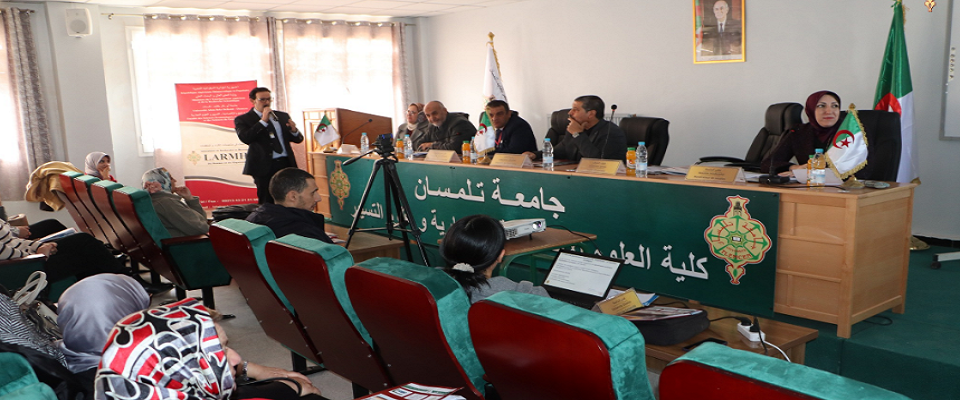


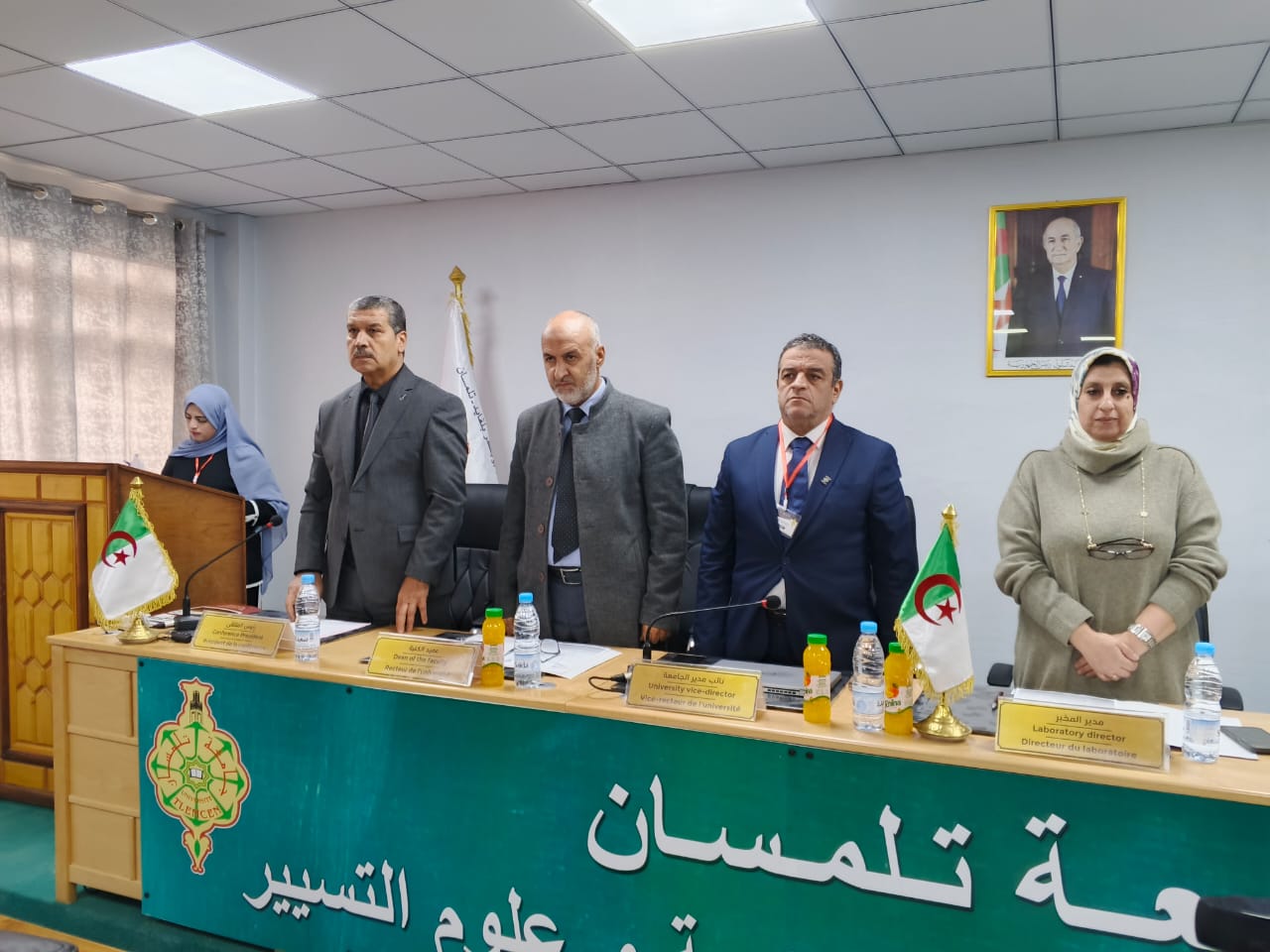
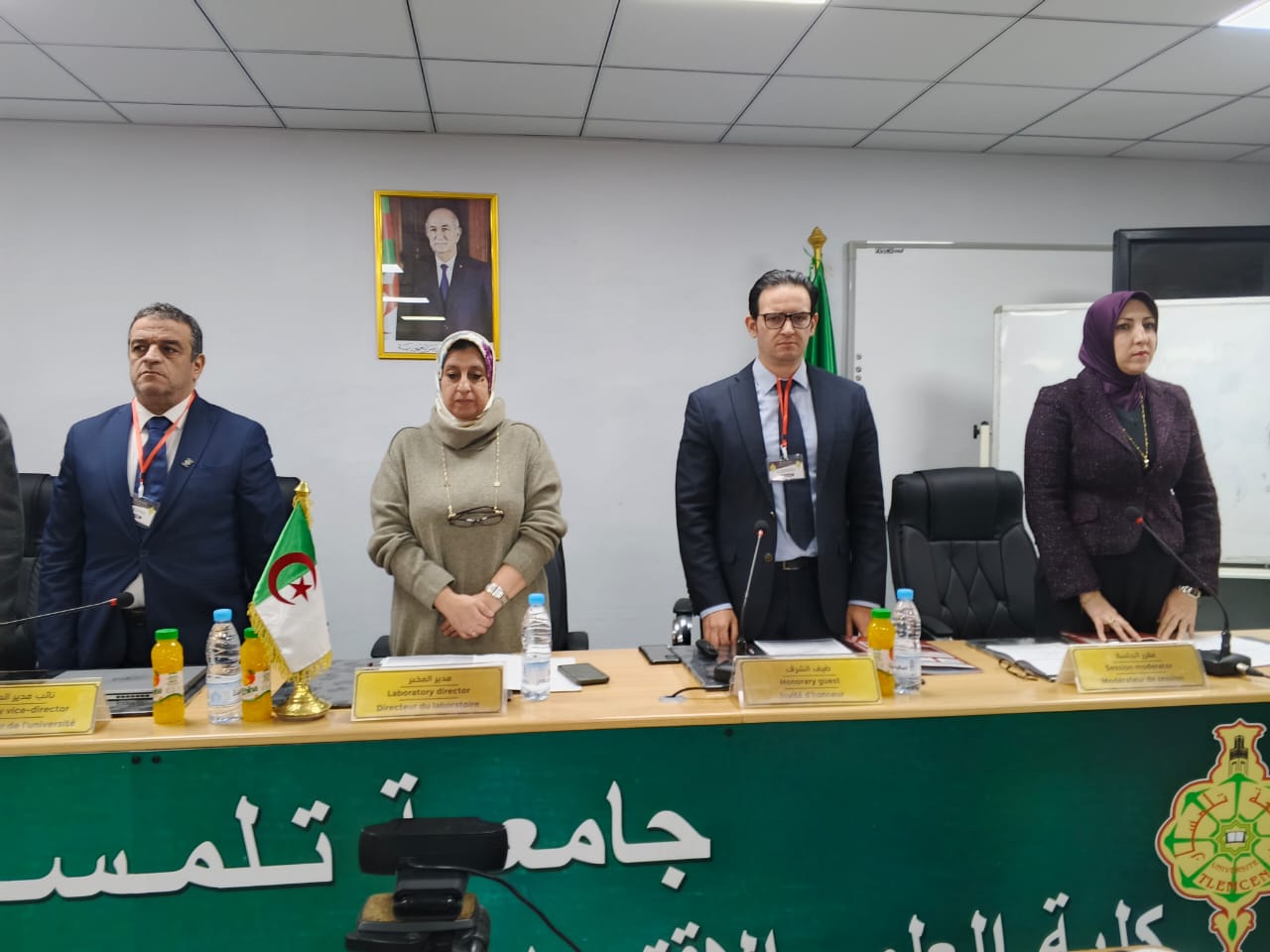
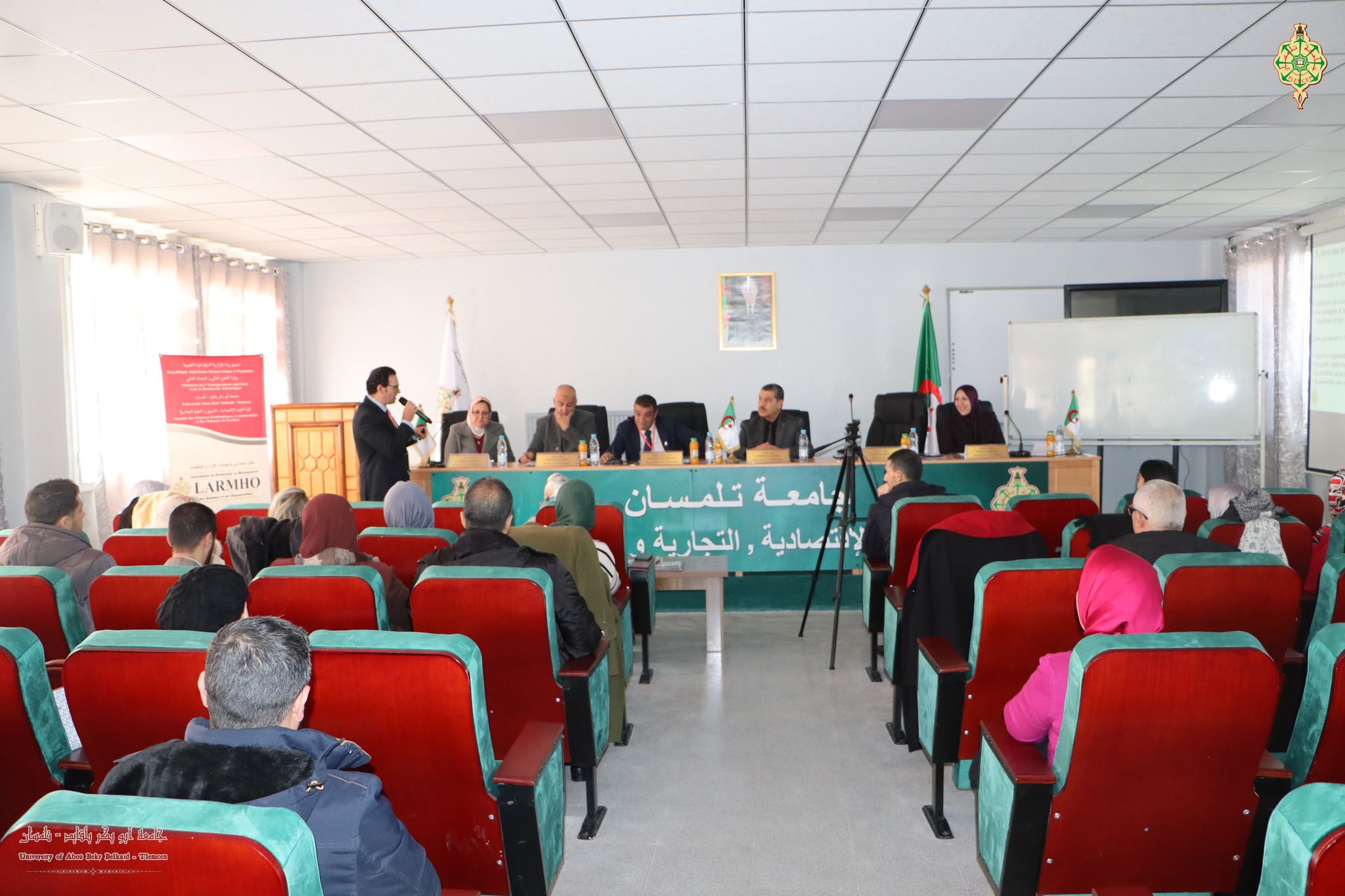
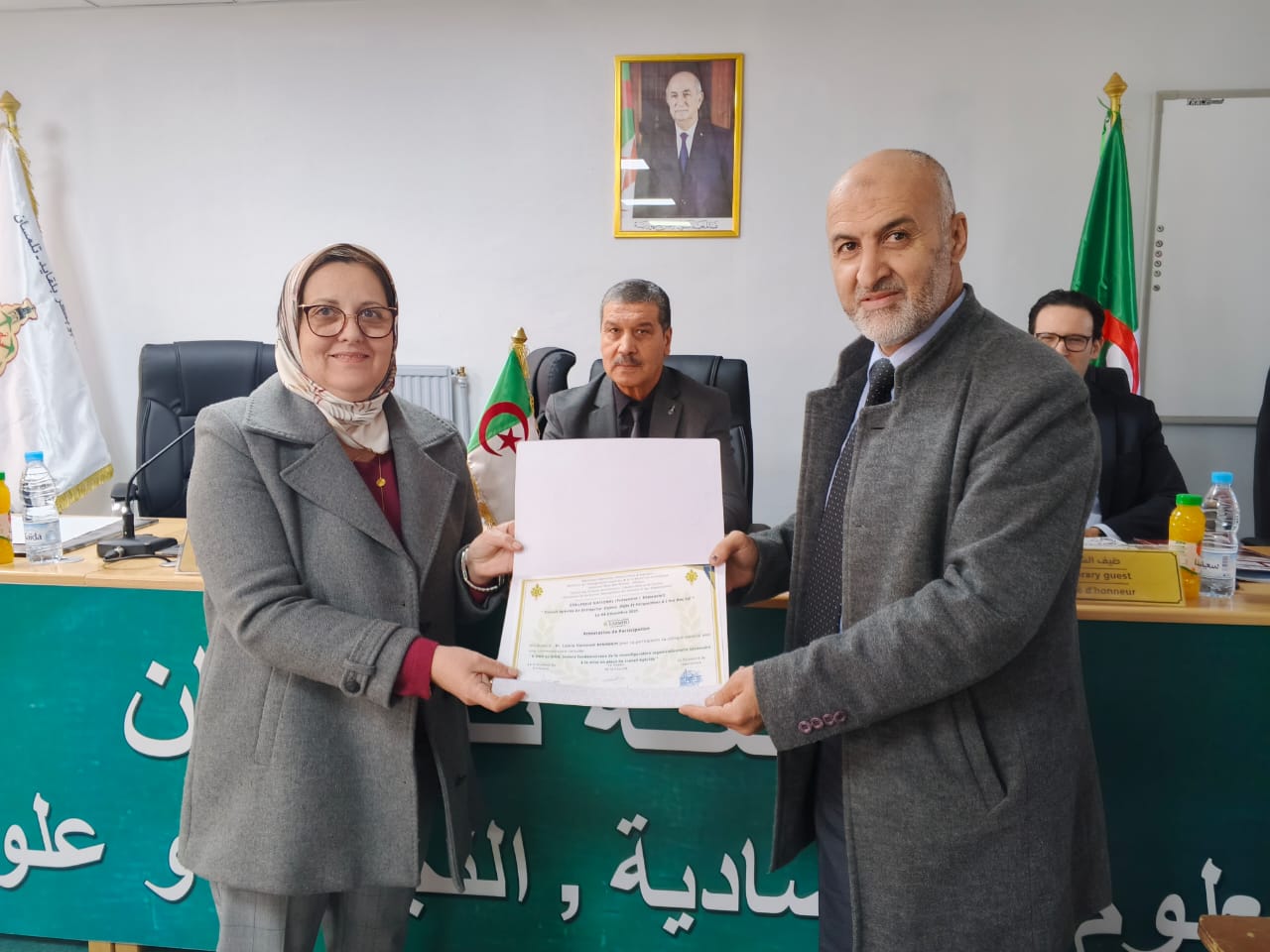
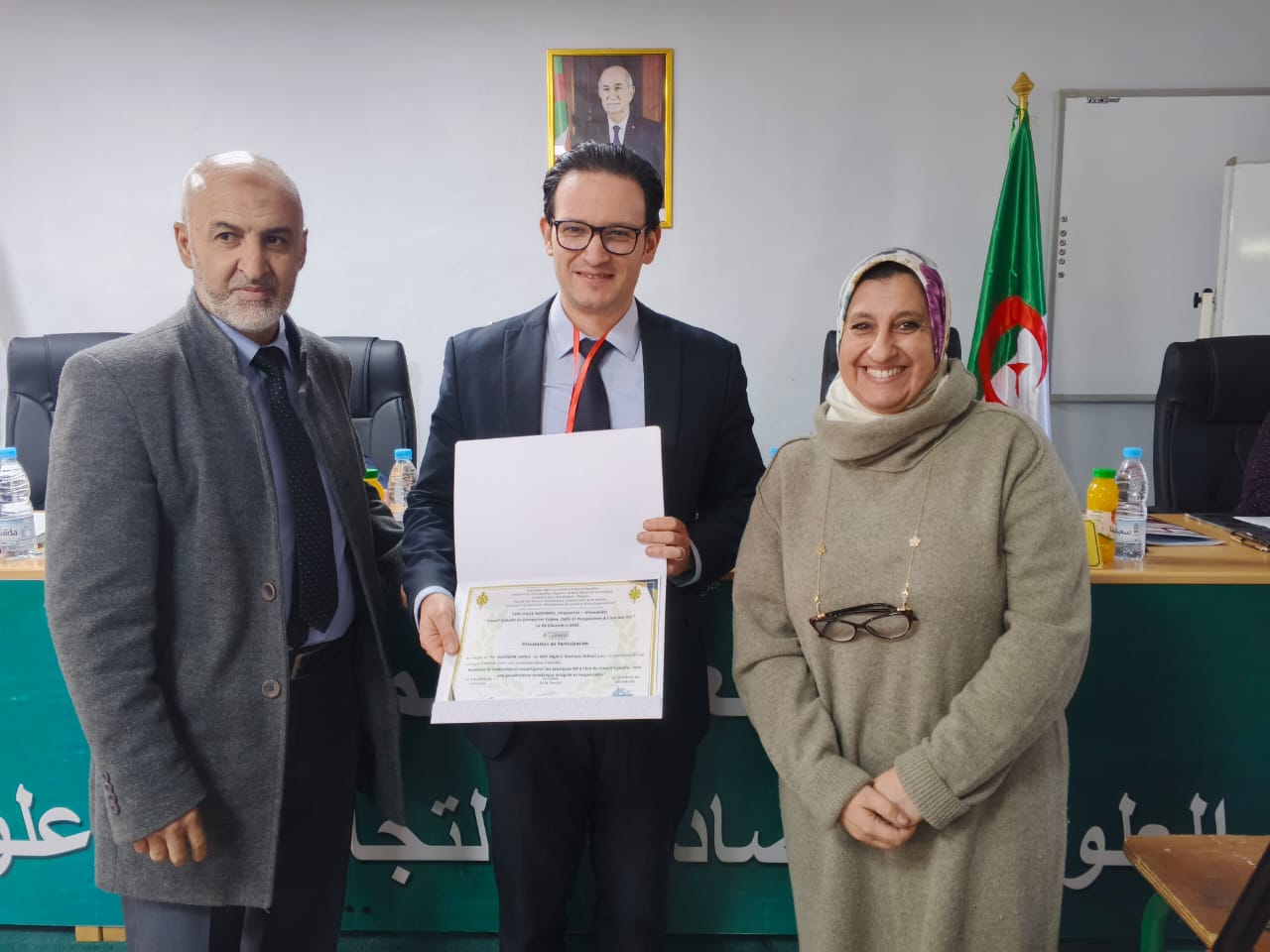
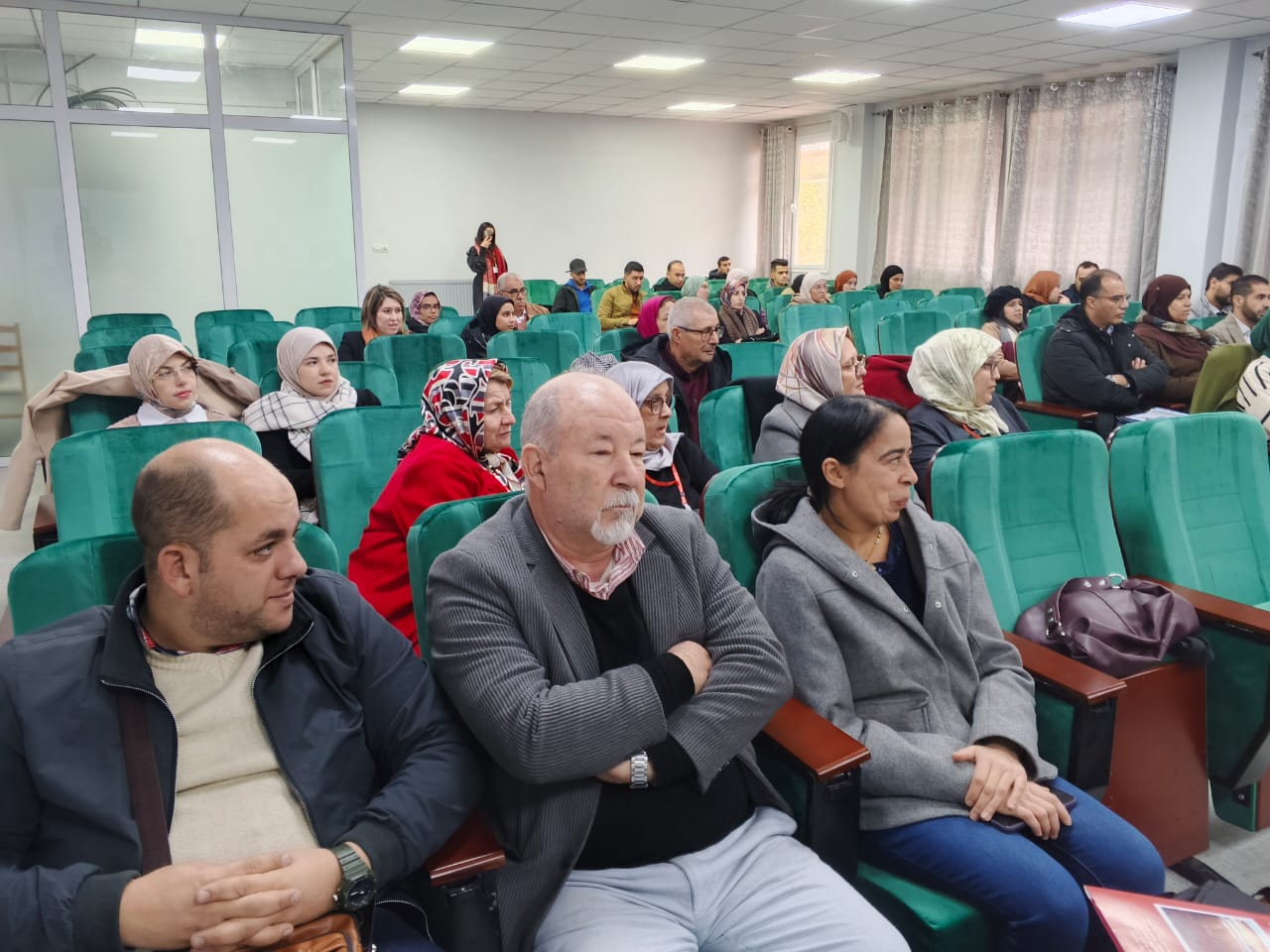
The Laboratory for Research in Human Resource and Organization Management (LARMHO), of the Faculty of Economics, Commerce, and Management Sciences, organized on Thursday, December 4, 2025, a national hybrid colloquium (on-site and virtual) titled: “Hybrid Work in Organizations: Challenges, Opportunities, and Perspectives in the Era of Information and Communication Technologies”, under the chairmanship of Professors Belkacem Ferouani and Fatma Allam.
The colloquium highlighted the importance of hybrid work as a strategic option capable of reshaping work patterns within organizations and balancing flexibility with productivity, particularly in the post-COVID-19 context.
The main topics discussed included:
1. Modern Approaches to Human Resource Management in Hybrid Work: results-oriented management methods, virtual teams, and competency-based management.
2. Conceptual Approach to Hybrid Work: definition, characteristics, components, and types of hybrid work, and its position between on-site and remote work.
3. Impact, Risks, and Implementation Strategies: effects on productivity and professional quality of life, organizational and technological risks, and effective deployment strategies.
4. Organizational Commitment in the Hybrid Context: influence of hybrid work on employee loyalty and engagement, and factors promoting sustained commitment.
5. Role of Information and Communication Technologies: contribution of electronic HR systems (HRM, e-SHRM) to talent management and organizational development.
6. Motivating Human Resources in a Hybrid Environment: adapted motivation mechanisms, including flexibility, digital recognition, performance-based rewards, and support for work-life balance.
7. National Intellectual Capital and Transformation of Work Patterns: the role of knowledge, skills, and innovation in establishing an effective and sustainable hybrid work environment.
The colloquium provided a scientific platform for discussion and exchange on contemporary work transformations, particularly hybrid work, combining theoretical and practical approaches to better understand its challenges and anticipate its future development within organizations.
 |
 |
 |
 |
 |
 |
 |
 |
 |
 |