

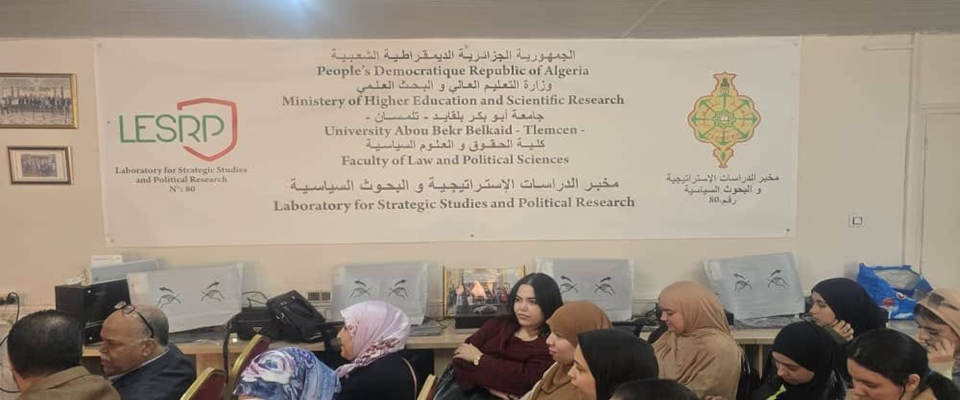


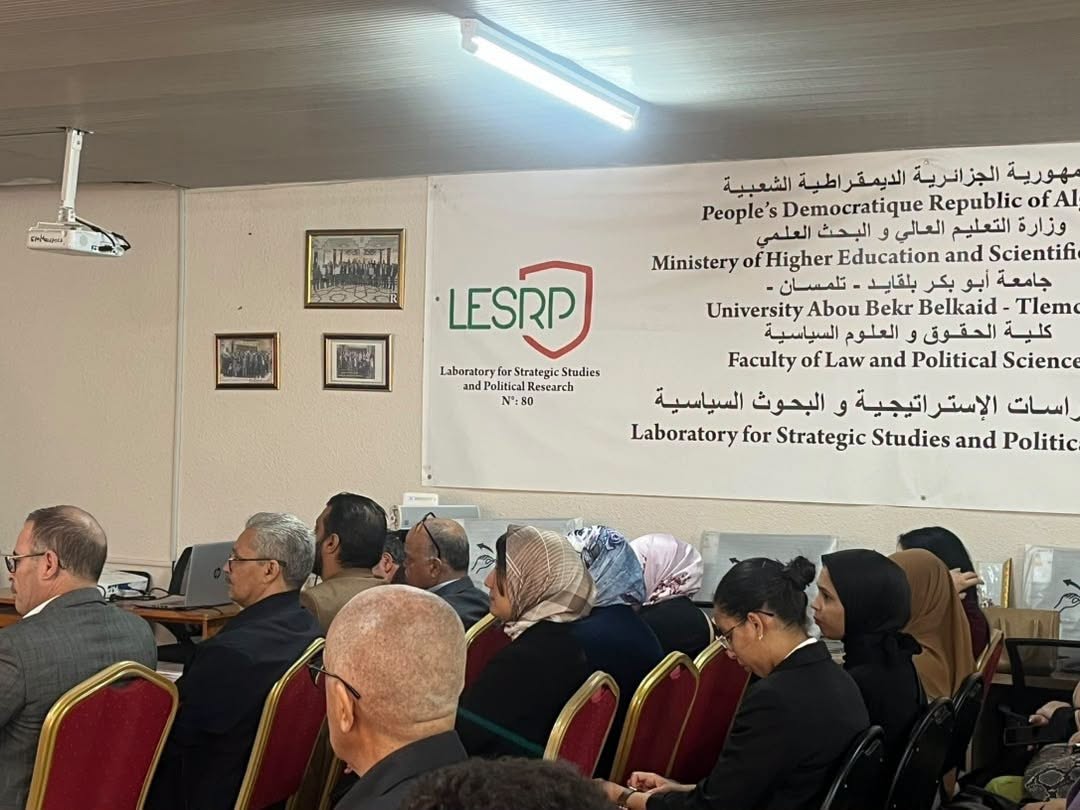
On the occasion of the commemoration of the 72nd anniversary of the outbreak of the Glorious 1 November 1954 Revolution, the Laboratory of Strategic Studies and Political Research organized, on Tuesday, 3 November 2026, a national symposium entitled “Artificial Intelligence and Border Governance: Towards Building Smart, Secure and Sustainable Borders in the Face of Contemporary Security Threats”, under the presidency of Dr. Saliha MAMMAD.
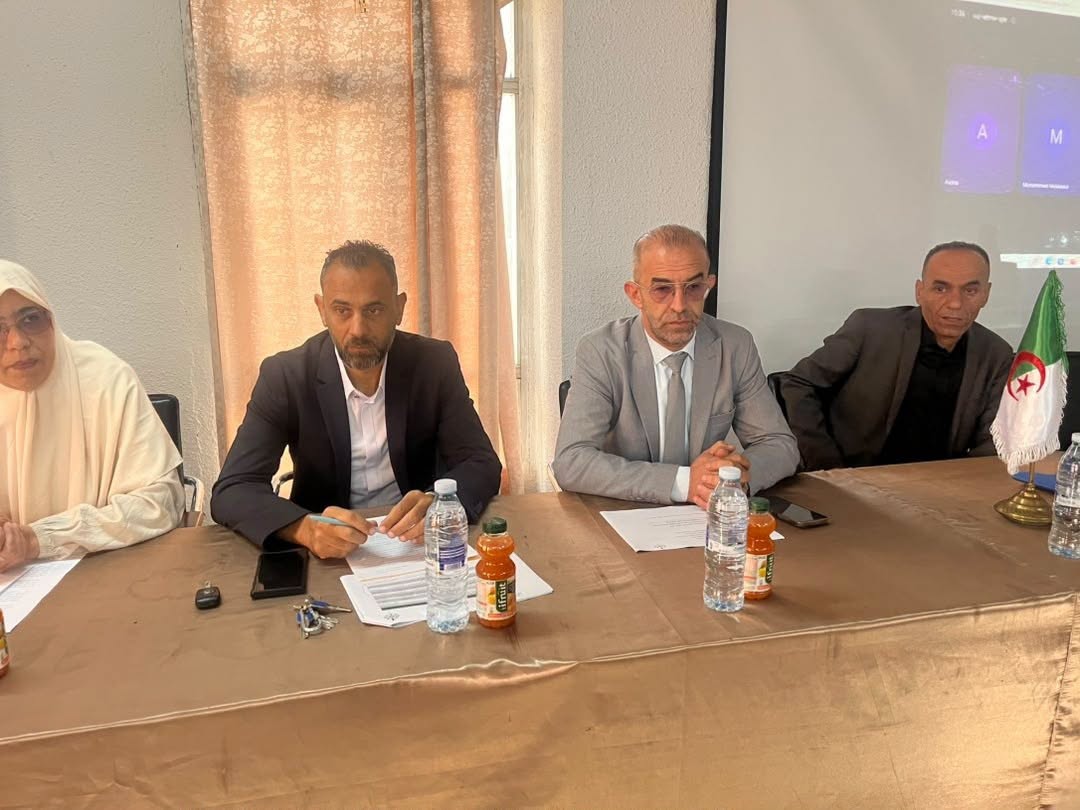
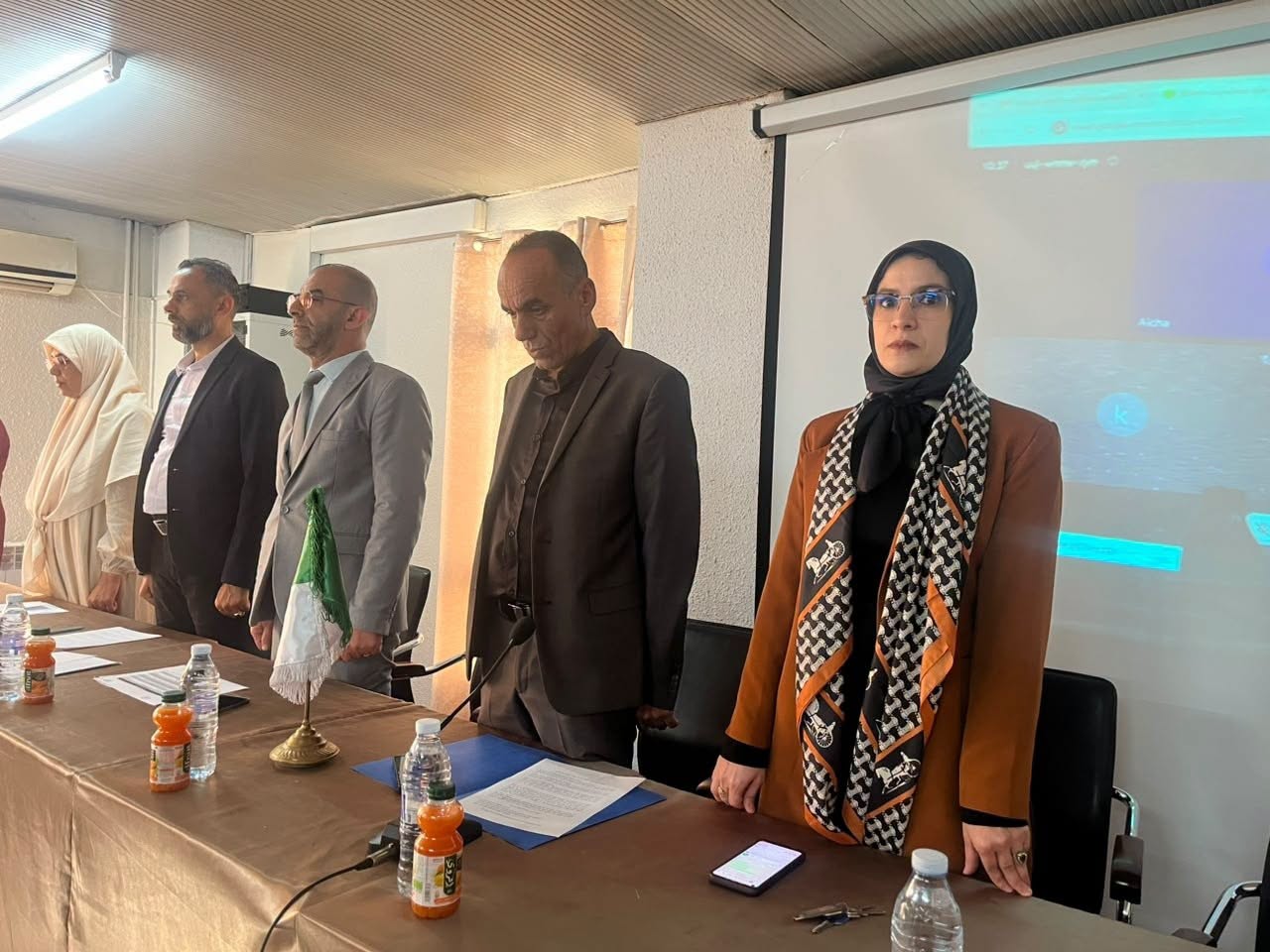
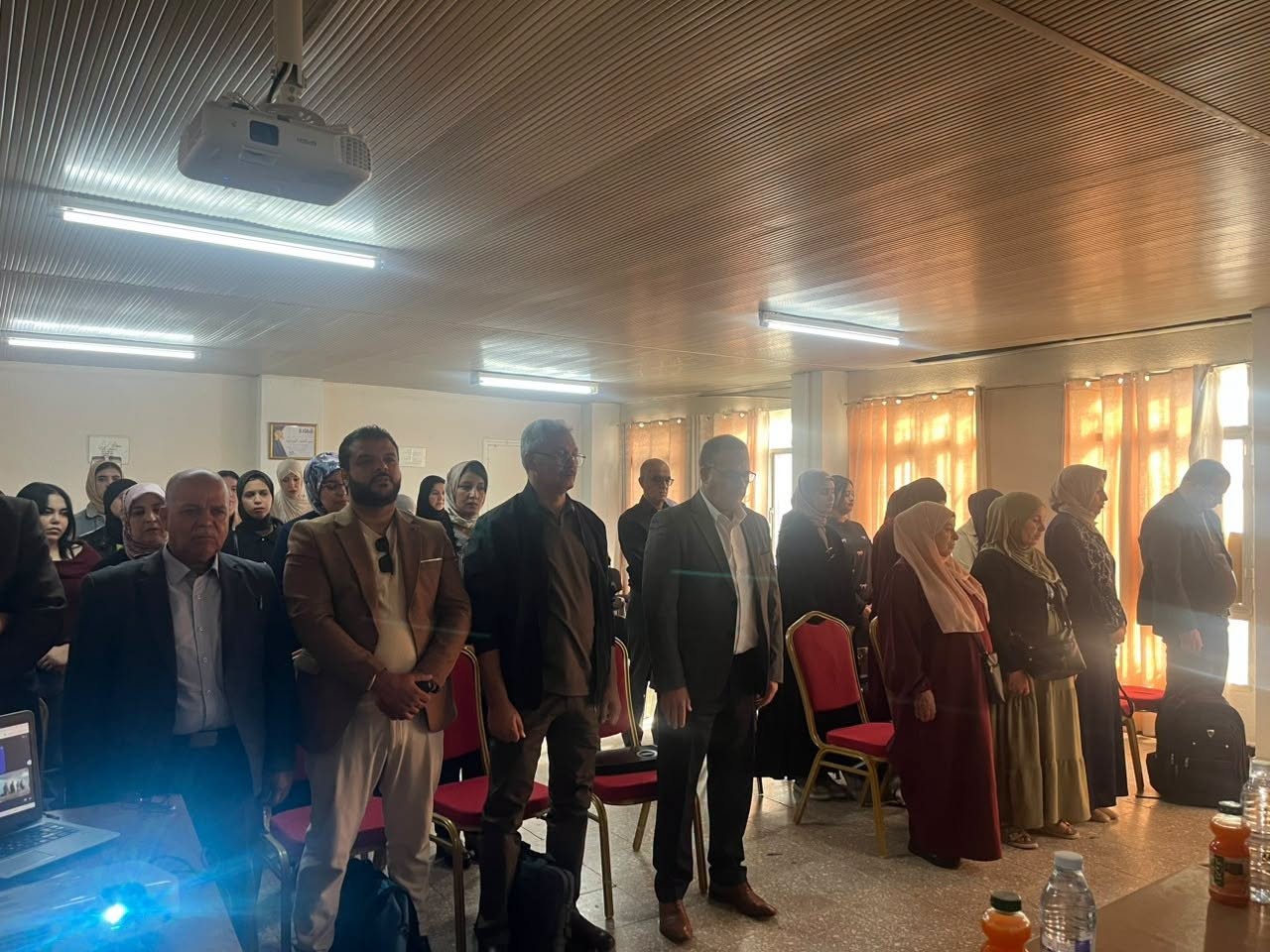
The opening session was inaugurated by Pr. Fethi OUHIB, Dean of the Faculty of Law and Political Science, in the presence of representatives of the Department of Political Science, Dr. Abdallah TELLI and Dr. Meriem ZEKRI, as well as Pr. Walid DOUZI, Chair of the Scientific Committee. The event was also attended by a number of teachers, researchers, academics, and specialists in security and political affairs.
In his opening address, Pr. Mohamed Samir AYAD, Director of the Laboratory of Strategic Studies and Political Research, emphasized that this symposium constitutes an important academic platform for examining the profound transformations brought about by emerging intelligent technologies in the concepts of sovereignty, security, and border management. He further highlighted its academic role in fostering the exchange of knowledge, perspectives, and expertise, while exploring the prospects for harnessing artificial intelligence to strengthen border security, in accordance with the principles of good governance, the protection of fundamental rights and freedoms, and the requirements of sustainable development.
He also stressed that the real challenge no longer lies solely in securing borders from a geographical perspective, but increasingly in developing the capacity to anticipate threats, manage risks, and establish intelligent security systems capable of responding effectively to the complexities of the contemporary regional and international environment. This approach requires striking a balance between security imperatives, respect for fundamental rights and freedoms, and the principles of sound governance.
The symposium witnessed significant academic participation, featuring 27 scientific presentations delivered by researchers and academics representing 16 higher education institutions. The proceedings were organized into four scientific sessions, providing an opportunity to explore diverse analytical approaches and exchange perspectives on the various dimensions of artificial intelligence, its applications in border governance, and its potential role in addressing contemporary security challenges.
 |
 |
 |
 |
 |
 |