



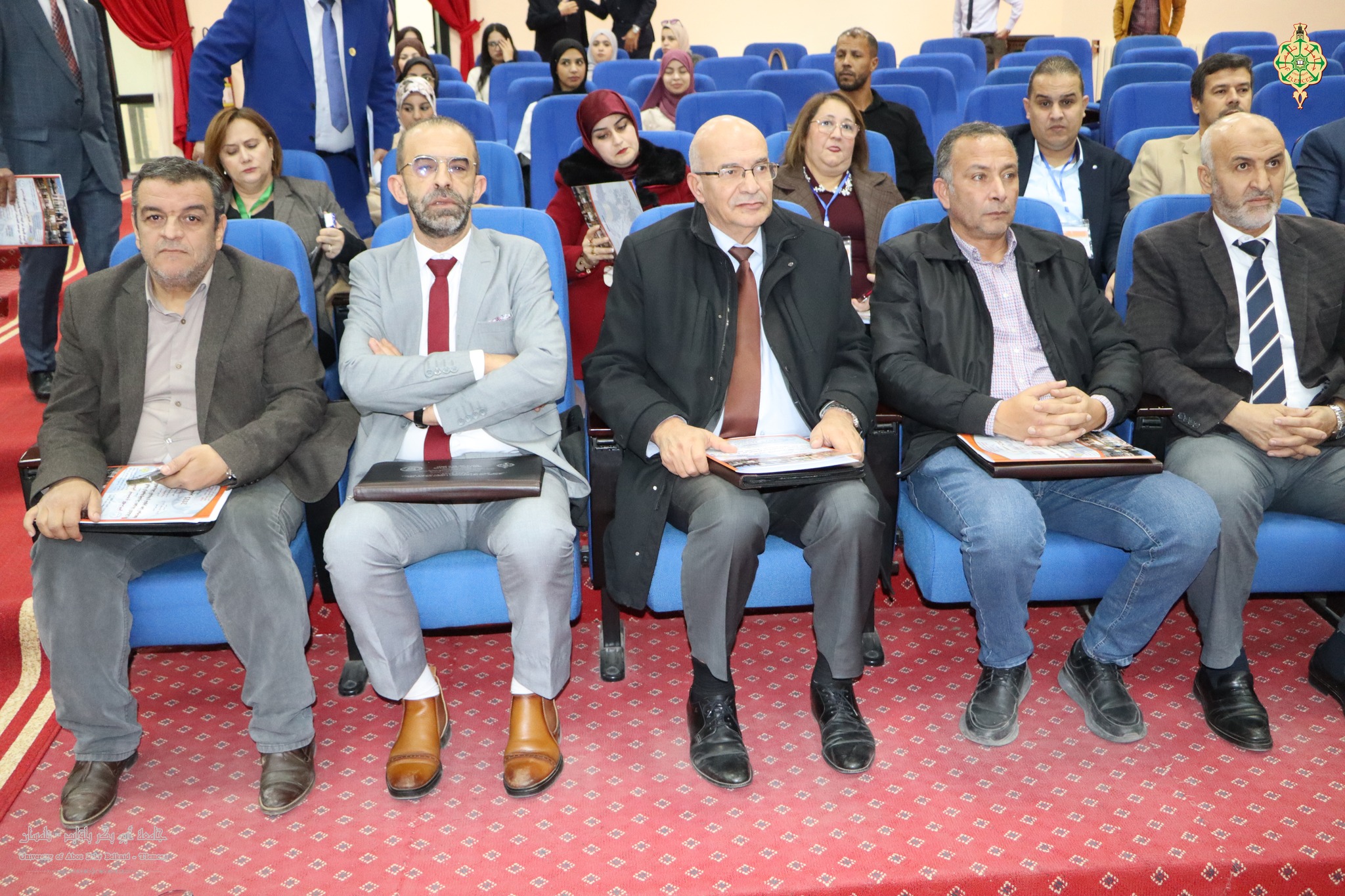
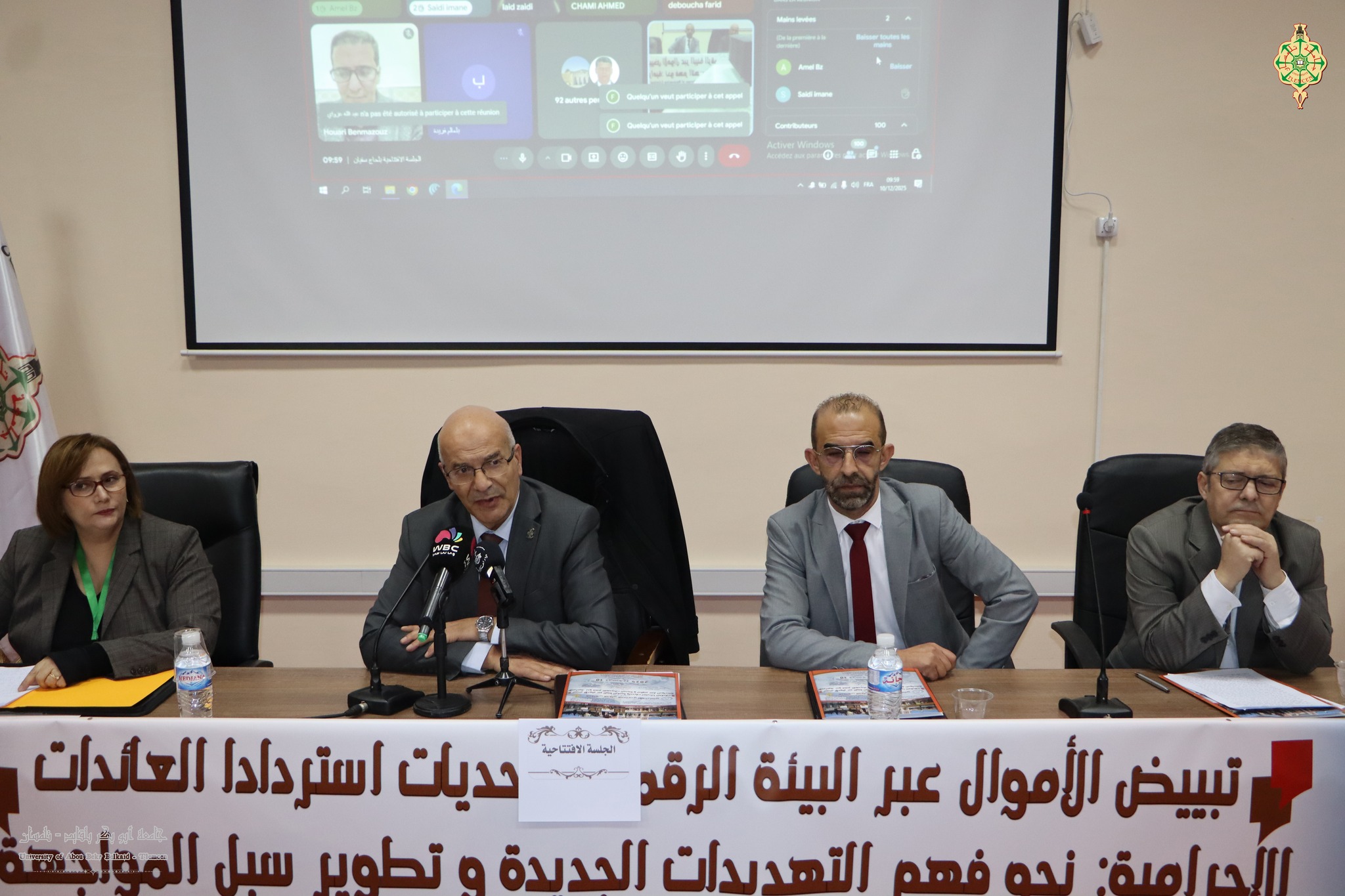
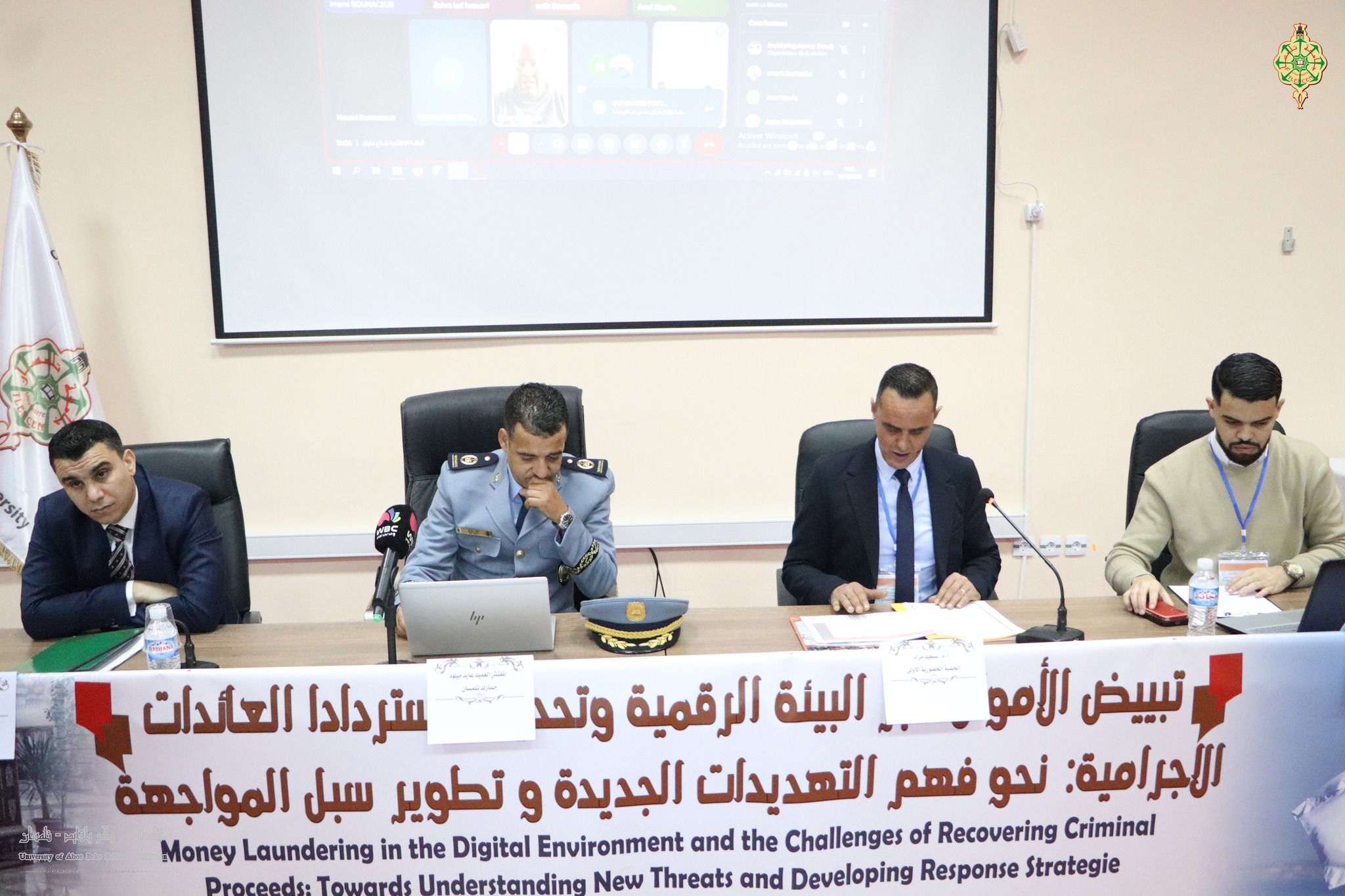
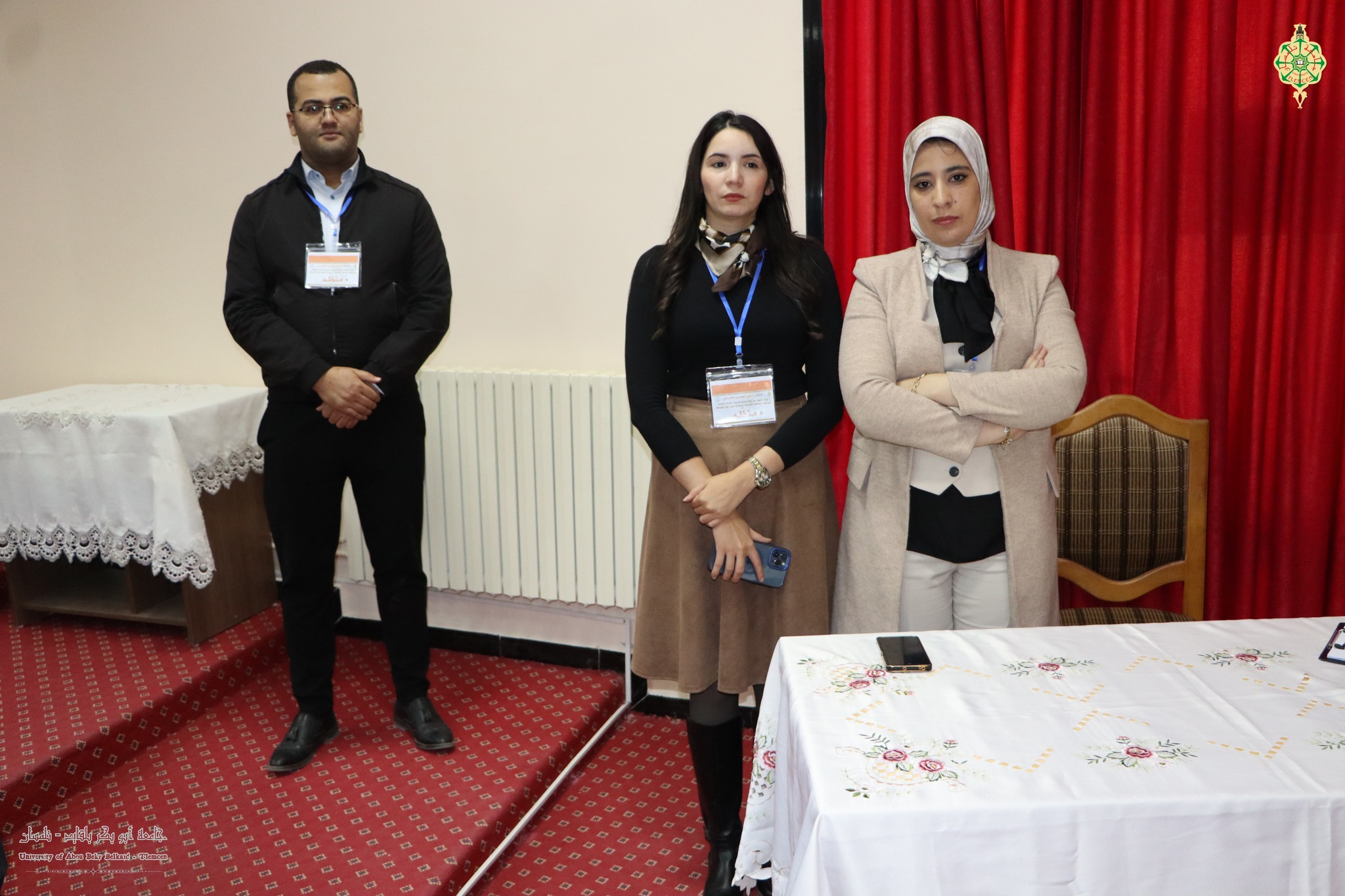
The Conference Hall of the Central Library at the New pole hosted, on Wednesday, December 10, 2025, an international colloquium entitled: “Money Laundering in the Digital Environment and the challenges of recovering the proceeds of Crime: Towards a Better Understanding of Emerging Threats and the Development of Countermeasures”, held under the chairmanship of Professor Leïla Benguela, and attended by university officials, academics, and national and international researchers. This colloquium was held in a context characterized by the growing risks associated with digital economic crime, particularly with the expansion of the digital space, cryptocurrencies, and digital assets, as well as the increasing difficulties related to the tracing, seizure, and recovery of criminal proceeds.
The speakers, led by the Rector of the University and the Dean of the Faculty of Law and Political Science, emphasized the need for the university to fully assume its scientific role by proposing academic and legal solutions adapted to accelerated digital transformations, while stressing the urgency of updating national legislation and strengthening specialized training in the fields of law and technology. The colloquium adopted a multidimensional approach to the issue, combining legislative and technical perspectives through thematic axes addressing the conceptual framework of digital money laundering, legal and institutional challenges, and the prospects of using artificial intelligence technologies in combating this phenomenon. The presentations also highlighted the analysis of emerging methods employed by criminal networks, particularly anonymization techniques, transaction encryption, and the increasing exploitation of advanced technologies.
This scientific meeting aims to assess the effectiveness of national and international legal frameworks, identify their strengths and shortcomings, and formulate strategic visions as well as operational proposals intended to strengthen prevention and enforcement mechanisms, develop financial analysis tools, and enhance international cooperation, given the inherently transnational nature of digital financial crime.
This meeting confirms the central role of the university as a knowledge-producing institution and a key actor in shaping public policies, through its contribution to addressing threats to economic and financial security, as well as reinforcing national and international efforts to combat digital crime in a context of rapid technological change.
 |
 |
 |
 |
 |
 |
 |
 |
 |
 |
 |
 |